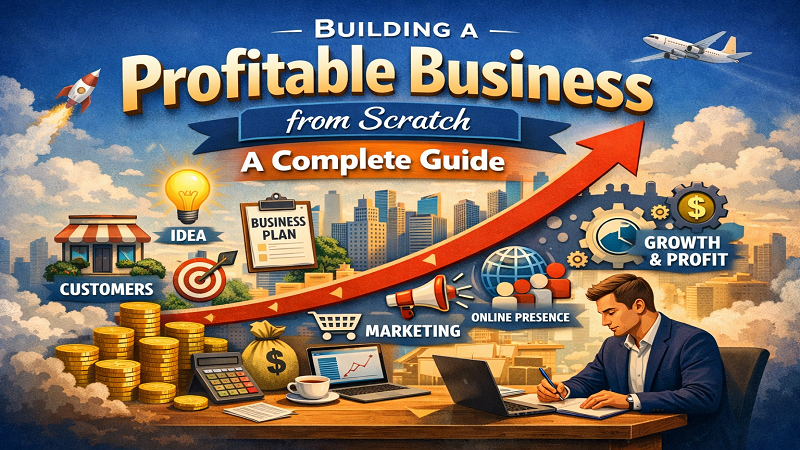
Starting a business from scratch is both exciting and challenging. Many of today’s most successful companies began with a simple idea, limited resources, and a strong vision. Companies like Apple, Amazon, and Nike all started small before becoming global giants. While not every startup becomes a billion-dollar brand, anyone with determination, planning, and smart execution can build a profitable business from scratch.
This comprehensive guide will walk you through the essential steps—from idea generation to scaling—so you can turn your vision into a sustainable and profitable venture.
1. Develop a Profitable Business Idea
Every successful business begins with a strong idea. However, a good idea alone isn’t enough—it must solve a real problem or fulfill a clear demand in the market.
Identify Problems and Gaps
Look around your daily life. What frustrations do people commonly face? What products or services are missing or poorly delivered? Businesses that solve real problems often succeed because they create value.
For example:
- Improving delivery speed in e-commerce.
- Offering affordable digital marketing services for small businesses.
- Creating eco-friendly alternatives to everyday products.
- Evaluate Market Demand
Before committing to your idea, validate it:
- Conduct surveys or interviews.
- Study online forums and social media discussions.
- Analyze competitors in your niche.
- Use keyword research tools to gauge interest.
If people are already paying for similar solutions, that’s a good sign. It means there is demand.
2. Conduct Market Research
Market research helps you understand your target audience and competitive landscape.
Define Your Target Audience
Ask yourself:
- Who will buy my product?
- What is their age, income level, and lifestyle?
- What are their buying habits?
The more specific you are, the easier it becomes to design effective marketing strategies.
Study Your Competitors
Analyze:
- Their pricing strategy.
- Their strengths and weaknesses.
- Customer reviews.
- Their marketing methods.
Your goal isn’t to copy them, but to identify opportunities to differentiate yourself—through better service, lower prices, improved quality, or unique branding.
3. Create a Solid Business Plan
A business plan serves as your roadmap. It outlines your goals and how you intend to achieve them.
Key Components of a Business Plan:
- Executive summary
- Business description
- Market analysis
- Product or service details
- Marketing and sales strategy
- Financial projections
- Operational plan
A clear business plan also helps attract investors or secure loans if you need funding.
4. Start Lean and Manage Finances Wisely
One of the biggest mistakes new entrepreneurs make is overspending early.
Keep Initial Costs Low
- Work from home if possible.
- Use free or affordable tools.
- Outsource only when necessary.
-
Avoid large inventory investments without testing demand.
Track Every Expense
Maintain accurate financial records from day one. Use accounting software or spreadsheets to monitor:
- Revenue
- Costs
- Profit margins
- Cash flow
Positive cash flow is critical. Many businesses fail not because they aren’t profitable, but because they run out of cash.
5. Build a Strong Brand Identity
Branding goes beyond a logo. It represents your business’s personality, values, and promise to customers.
Elements of Strong Branding:
- Memorable business name
- Professional logo
- Consistent color scheme
- Clear mission statement
- Unique value proposition
Look at how Coca-Cola uses consistent branding worldwide. Strong branding builds trust and customer loyalty.
6. Develop a Minimum Viable Product (MVP)
Instead of building a perfect product immediately, create a Minimum Viable Product (MVP). This is a simplified version of your product with just enough features to satisfy early customers.
Benefits of an MVP:
- Lower development costs
- Faster market entry
- Real customer feedback
- Reduced risk
Once you gather feedback, improve and refine your offering based on actual user needs.
7. Establish an Online Presence
In today’s digital age, having an online presence is essential—even for offline businesses.
Build a Professional Website
Your website should:
- Clearly explain your product/service
- Include testimonials
- Display contact information
- Offer secure payment options (if selling online)
Use Social Media Strategically
Choose platforms where your target audience spends time:
- Instagram for visual products
- LinkedIn for B2B services
- Facebook for local businesses
- TikTok for younger audiences
Content marketing, such as blogging and video tutorials, can establish your authority in your industry.
8. Focus on Customer Acquisition
Without customers, there is no business. Customer acquisition should be one of your top priorities.
Effective Customer Acquisition Strategies:
- Social media marketing
- Email marketing
- Paid advertising
- Referral programs
- Influencer collaborations
- SEO (Search Engine Optimization)
Companies like Dropbox grew rapidly by offering referral incentives. Their strategy rewarded users with extra storage for inviting friends.
9. Deliver Outstanding Customer Service
Customer satisfaction drives repeat business and word-of-mouth referrals.
Provide:
- Fast response times
- Easy return policies
- Clear communication
- Post-sale support
Happy customers become brand ambassadors. Poor service, on the other hand, can damage your reputation quickly—especially in the age of online reviews.
10. Optimize for Profitability
Revenue alone doesn’t guarantee success. Profitability depends on managing costs and maximizing margins.
Improve Profit Margins By:
- Negotiating better supplier rates
- Increasing prices strategically
- Reducing waste
- Automating repetitive tasks
- Upselling or cross-selling products
Analyze your numbers regularly. Identify which products or services generate the most profit and focus on scaling those.
11. Build Systems and Processes
As your business grows, chaos can develop without proper systems.
Create:
- Standard operating procedures (SOPs)
- Sales scripts
- Marketing calendars
- Inventory management systems
- Customer support workflows
Systems make your business scalable and less dependent on you personally.
12. Scale Strategically
Once your business becomes stable and profitable, you can begin scaling.
Ways to Scale:
- Launch new products
- Expand into new markets
- Partner with other businesses
- Hire employees
- Automate operations
- Increase marketing investment
Look at how Starbucks expanded from a single store to a global brand through careful market expansion and consistent quality control.
Scaling too quickly without proper infrastructure can cause financial strain, so grow at a sustainable pace.
13. Develop Entrepreneurial Mindset and Resilience
Building a profitable business requires mental strength. Challenges are inevitable:
- Financial pressure
- Competition
- Unexpected setbacks
- Economic downturns
Successful entrepreneurs focus on:
- Continuous learning
- Adaptability
- Discipline
- Long-term thinking
- For example, Elon Musk faced multiple failures before achieving success with Tesla and SpaceX. Persistence often separates successful entrepreneurs from those who quit.
14. Monitor Performance and Adapt
Use key performance indicators (KPIs) to measure success:
- Revenue growth
- Customer acquisition cost
- Lifetime customer value
- Conversion rates
- Profit margins
Regular evaluation allows you to identify weaknesses early and make data-driven decisions.
Markets change constantly. Customer preferences evolve. Stay flexible and ready to adapt your strategy when necessary.
Final Thoughts
Building a profitable business from scratch is not about luck—it’s about strategy, consistency, and execution. Start with a validated idea, create a solid plan, manage finances carefully, and prioritize customer satisfaction. Focus on delivering real value, and profitability will follow.
Remember, every major company once started as a small operation with limited resources. With dedication, smart planning, and resilience, you can build a thriving business that generates income, creates impact, and offers long-term financial freedom.